
The arithmetic, with the awkward parts left in.
Every number on this page is either a published list price or a measurement from one real week on the Triss codebase. Where Triss does not pay off, that is on the page too.
This estimates API inference costs for the stated workload and pricing assumptions. It does not predict a reduction in a fixed-price Claude or Codex subscription.
The calculator compares an Anthropic list-price baseline (Sonnet/Opus per-token prices) with DeepSeek delegated pricing at the stated cache-hit and workload assumptions — it does not price an arbitrary user-selected provider. Triss is open-source software, not a hosted subscription. Model providers and execution services may charge separately.
Unknown prices stay unknown: usage accounting never treats an unreported price or token count as zero — see the usage accounting methodology.
One measured week — not a projection
209 calls on the Triss codebase itself. A lower-cost model handled bulk reads; a higher-capability model handled reviews. The $2.22 total is the recorded cost of that one usage period — not proof of general savings or quality for every task.
Cache read 1.08M — 18.5% of input tokens were cache hits (mostly on the advanced model). Without cache the week would have cost ≈$2.69 instead of $2.22. Cache is the main lever after delegation.
DeepSeek pricing — off-peak USD per 1M (peak 2×) — 2026-08
Source: DeepSeek's official pricing notice and price card; effective 2026-08-16 16:00 UTC. CLI source: src/usage.js DEEPSEEK_PRICING — override via TRISS_PRICE_<MODEL>. Peak: 01:00–04:00/06:00–10:00 UTC; rest off-peak.
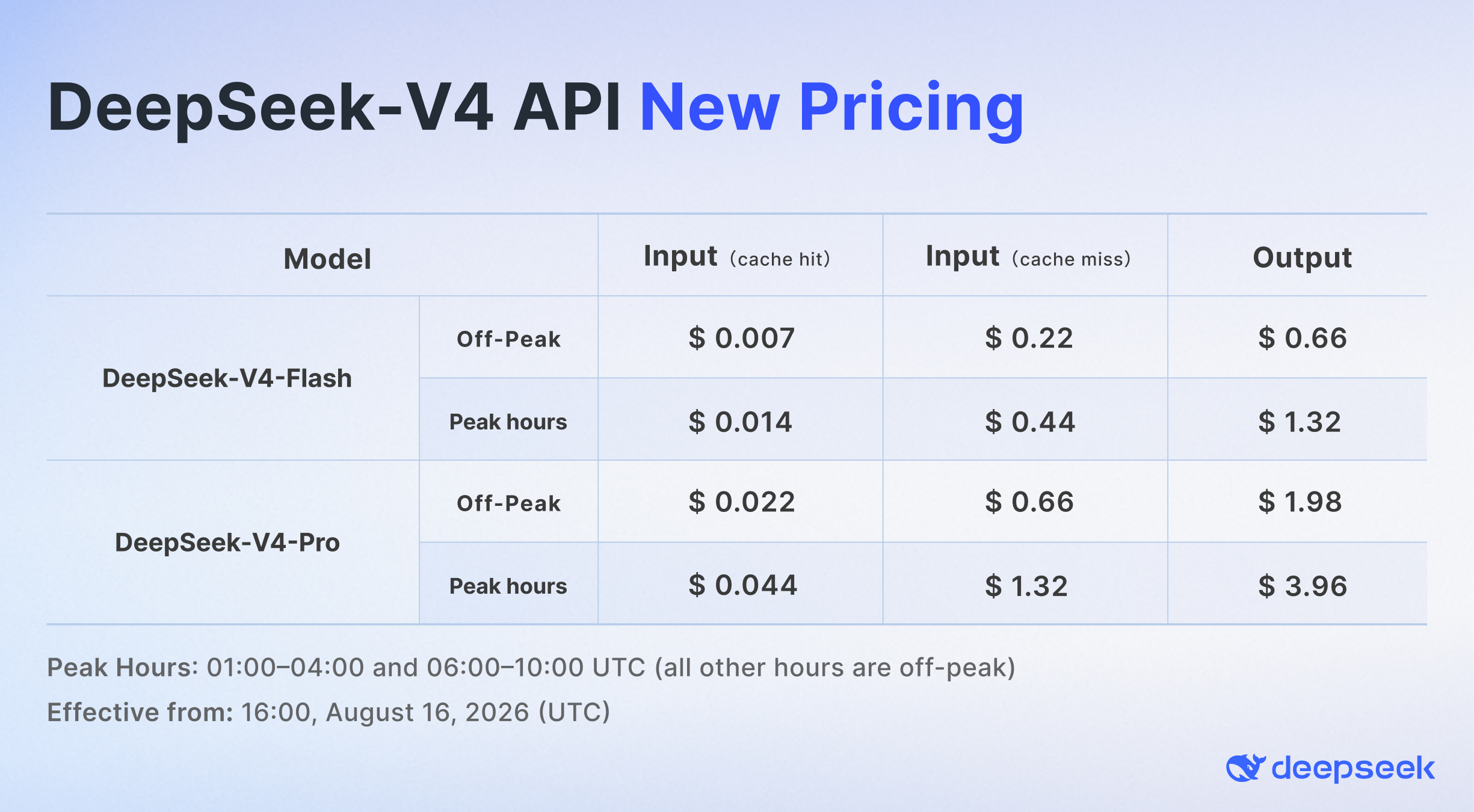
Calculator is honest: providerCost = IN*(1-hit)*inputPrice + IN*hit*cachePrice + OUT*outputPrice — previously cache was ignored and averaged as $0.0052/$0.0131. Cache write for DeepSeek = $0.
A two-file read roughly breaks even: the round trip plus the summary costs about what doing it directly would.
Architecture decisions, ambiguous requirements — being wrong is expensive. Cheap models are for volume, not verdicts.